

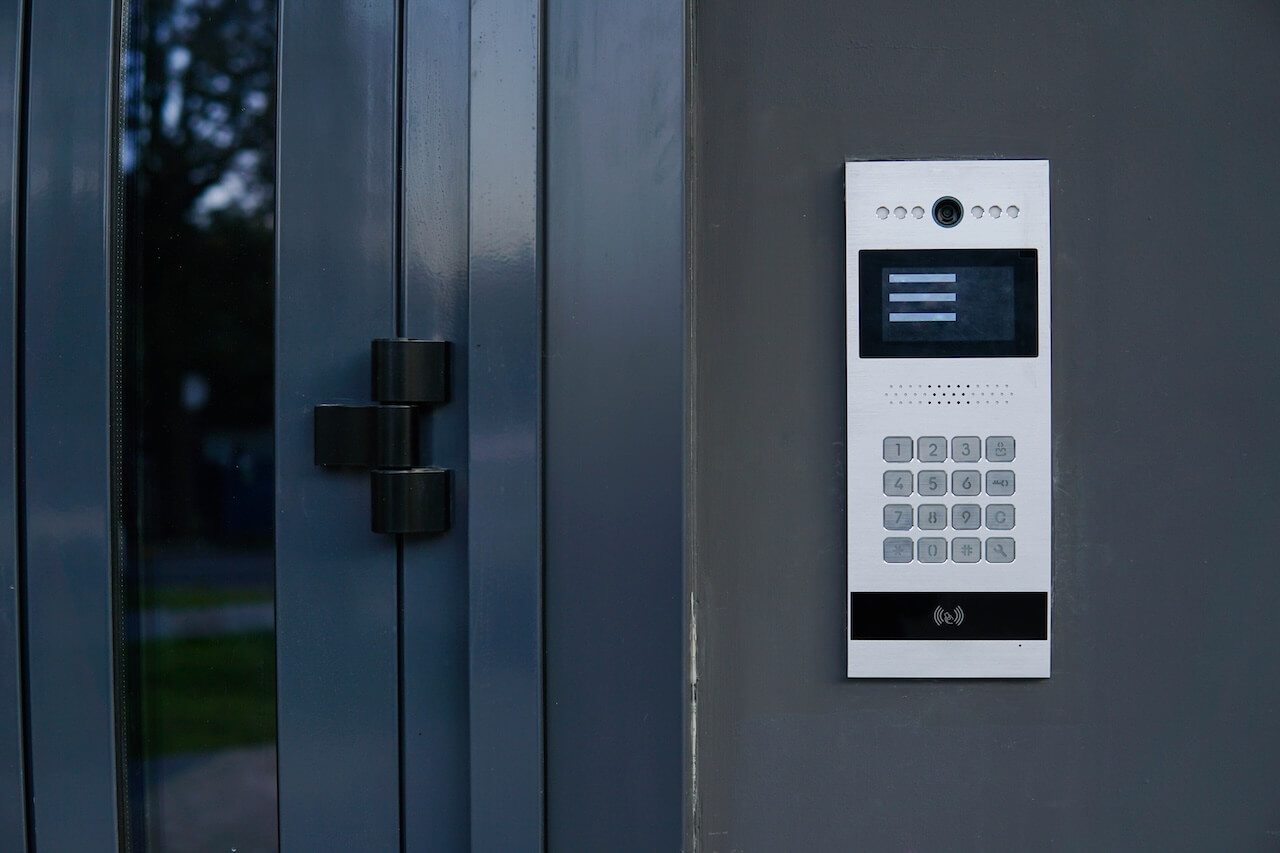
Apartment building security combines access control, video intercoms, surveillance cameras, and operational policies that protect a multifamily property’s shared spaces. It covers every zone from entrances and mailrooms to elevators and amenities, plus the day-to-day workflows that keep credentials, visitors, and deliveries under control.
Securing a multifamily property takes more than a strong front door. Threats show up in mailrooms, garages, elevators, and amenity spaces, and many gaps come from daily operations rather than hardware. This guide maps apartment building security by zone, covers the workflows that keep a system effective, and closes with a zone-by-zone audit checklist. For comparing vendors, equipment categories, and system pricing, see the apartment security system buyer’s guide.
How We Evaluated This Guide
This guide is based on common multifamily security layouts, published model code guidance, and Swiftlane product documentation. Life-safety guidance draws on the IBC and NFPA 101 sensor-release provisions as summarized by iDigHardware. Video equipment procurement guidance references 2 CFR 200.216. Product capabilities, code requirements, and installation scope vary by property, so confirm details with a qualified installer and the local Authority Having Jurisdiction (AHJ).
Key Takeaways
- Apartment building security works best in layers: perimeter access, video surveillance, delivery and package security, and elevator and amenity control.
- Many security gaps are operational rather than hardware-related: unrevoked credentials after move-out, propped doors, and untracked vendor access.
- Access-controlled package rooms with time-limited courier PINs and entry logs give staff a record of who entered and when.
- Cloud and on-site video storage each involve trade-offs in remote access, retention, and bandwidth. Recipients of federal grants or loans face added restrictions on certain manufacturers’ equipment under 2 CFR 200.216.
- Review electrified locks on egress doors with the AHJ or local fire marshal before installation.
- A zone-by-zone audit helps surface gaps before committing to an upgrade.
Table of Contents
- What Is an Apartment Building Security System?
- Multifamily Security Risks and Operational Vulnerabilities
- The 4-Layer Physical Security Architecture for Multifamily Properties
- The Operational Security Layer: Policies, Turnover, and Monitoring
- Life-Safety Code Coordination and Emergency Egress
- Planning an Apartment Building Security Upgrade
- Zone-by-Zone Property Security Audit Checklist
- Why Choose Swiftlane for Apartment Building Security
- Frequently Asked Questions
What Is an Apartment Building Security System?
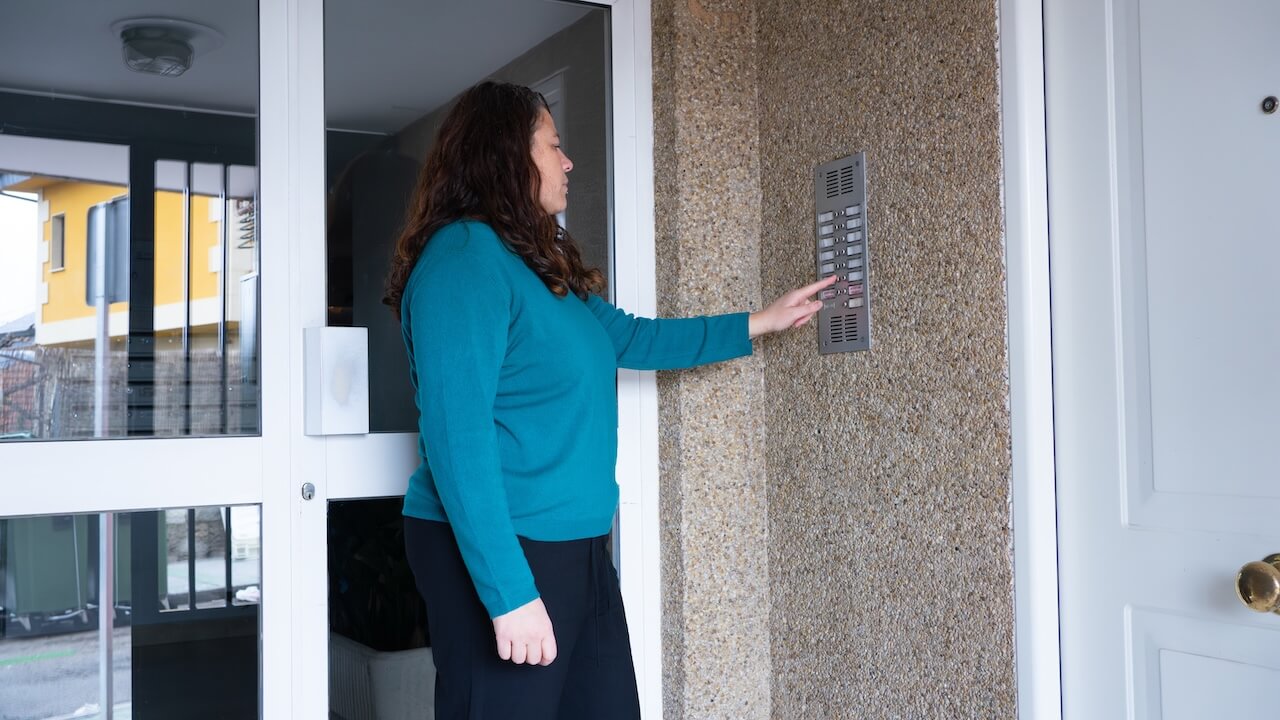
An apartment building security system is the set of connected tools a property uses to control who enters, monitor shared spaces, and respond to incidents across a multifamily building. It typically combines access control, multi-tenant video intercoms, surveillance cameras, and visitor and delivery management, all managed by property staff rather than individual residents.
Older buildings often ran each piece separately: an analog buzzer panel at the door, physical keys or standalone fob readers, and cameras recording to a local DVR in a back office. Modern systems increasingly bring these functions onto a cloud-based platform. That lets staff issue and revoke credentials, review entry logs, and manage multiple doors or buildings from one dashboard.
The key distinction is scope. An apartment building security system protects the areas a property operator is responsible for: entrances, gates, lobbies, mailrooms, garages, elevators, and amenities.
In-unit alarms and devices chosen by individual residents are a separate category, covered in the apartment security system buyer’s guide along with vendor and equipment comparisons.
Multifamily Security Risks and Operational Vulnerabilities
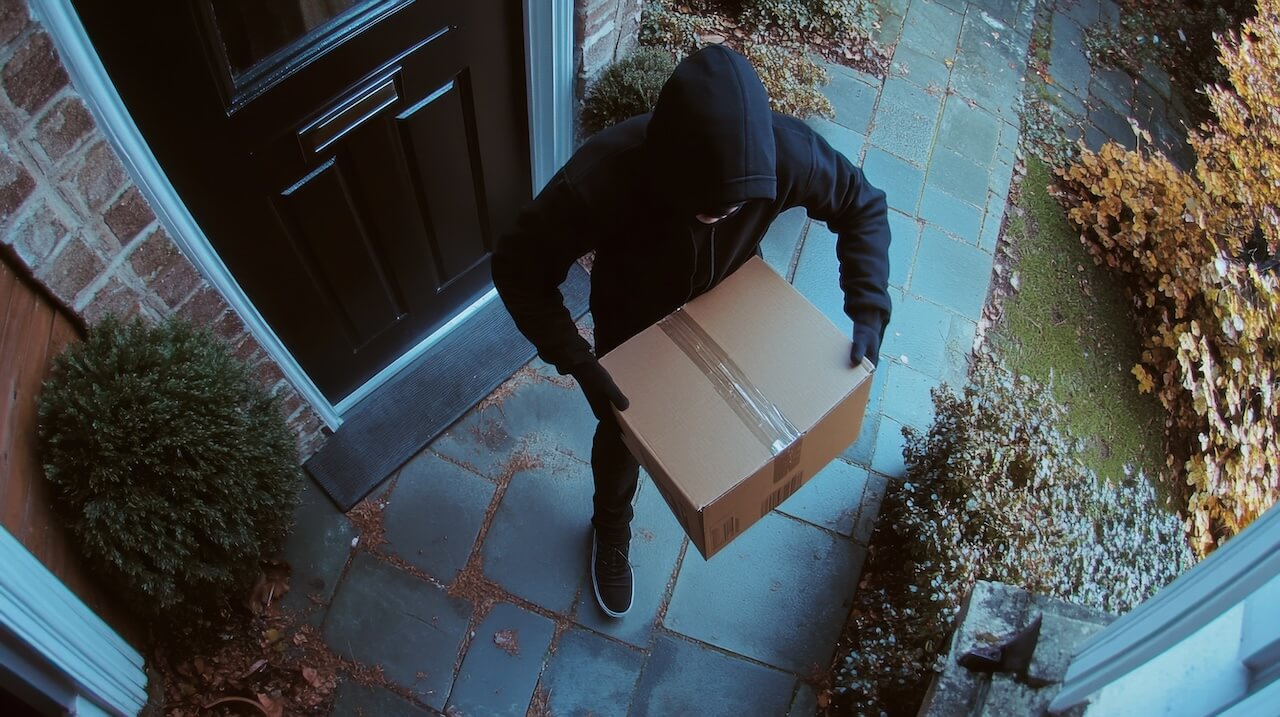
Most apartment security system incidents don’t involve sophisticated attacks. They come from everyday gaps: a door that doesn’t latch, a former resident’s fob that still works, or a delivery left in an open lobby. Knowing where these gaps usually appear makes it easier to decide which layers and workflows matter most.
- Package theft: Shared lobbies and unsecured mail areas make multifamily properties a frequent target. According to Security.org’s 2025 Package Theft Report, people in apartments and condos are more than three times as likely to have packages stolen as people in single-family homes.
- Tailgating and piggybacking: Unauthorized people follow residents through entrances, parking gates, or garage doors. Once inside, they can reach corridors, storage areas, and amenities.
- Propped and unlatched doors: Side entrances, stairwell doors, and loading doors are often propped open for convenience during move-ins, deliveries, or maintenance. Without door-status monitoring, staff may not know a door has been left open for hours.
- Credentials that outlive residency: Keys, fobs, and PIN codes that aren’t revoked at move-out give former residents, roommates, or guests ongoing access to the building.
- Untracked vendor and contractor access: Shared codes or loaned keys for cleaners, maintenance crews, and contractors leave no record of who entered or when, and the codes often go unchanged for years.
- Vacant units and turnover periods: Empty units between leases can become targets for squatting or theft, especially when lockbox keys or old credentials are still in circulation.
- Bike rooms and storage areas: Low-traffic rooms with basic locks can go days without anyone checking them, which makes theft easy to miss until a resident reports it.
- Back-of-house and perimeter weak points: Roof hatches, electrical rooms, service doors, and vehicle gates are rarely monitored as closely as the main entrance, and tampering can go unnoticed.
Each of these risks maps to a specific layer or workflow in the sections below. Package theft is covered under delivery management, tailgating under perimeter and elevator control, and credential turnover and vendor access under the operational security layer.
The 4-Layer Physical Security Architecture for Multifamily Properties
A strong apartment security system plan works from the outside in. Each layer covers different spaces and threats, and together they limit how far an unauthorized person can get even if one layer fails.
Layer 1: Perimeter and Entrance Access Control
The first layer decides who gets through the front door, garage, and vehicle gates.
- Visitor verification: Multi-tenant video intercoms let residents see and speak with guests before granting entry. Telephone entry systems, which call a resident’s phone from the entrance panel, remain common in older properties.
- Resident credentials: Key fobs, key cards, and mobile credentials replace physical keys and can be revoked individually. For credential types and frequencies, see this guide to fob systems.
- Vehicle gates: Gate intercoms and credential readers control access to parking areas and gated communities. The gate intercom systems guide covers hardware options in more detail.
For how entrance hardware connects to electric strikes and maglocks, see the guide to apartment intercoms with door release.
Layer 2: Video Surveillance
Cameras deter incidents and provide evidence when something goes wrong. Coverage matters more than camera count. Common placements include entrances and exits, lobbies, mailrooms and package rooms, garages, elevator lobbies, bike rooms, and perimeter gates. Never place cameras where residents have a reasonable expectation of privacy. Audio recording rules also vary by state.
Storage is the other major decision:
- Cloud video (VSaaS): Offers remote access, off-site backup, and easier multi-site management, but depends on upload bandwidth and usually carries recurring fees.
- On-site NVR or DVR: Keeps footage local and avoids ongoing cloud costs, but requires on-site hardware maintenance and physical protection of the recorder.
Properties that use federal grant or loan funds should also check equipment restrictions. Under 2 CFR 200.216, recipients can’t use those funds for certain covered telecommunications and video surveillance equipment. For a broader overview, see this guide to video surveillance systems.
Layer 3: Delivery Management and Package Security
Package volume has made delivery areas one of the most targeted parts of a multifamily building.
- Access-controlled package rooms: A locked room that opens only for authorized couriers and residents, with entry logged by credential.
- Smart parcel lockers: Individual compartments that notify residents when a package arrives. They work well in smaller lobbies but can fill up during peak seasons.
- Time-limited courier access: PIN codes or delivery credentials that work only for set windows give couriers entry without sharing permanent codes.
USPS mail carriers enter buildings through a Postal Service master access lock rather than property-issued credentials. According to USPS Handbook PO-632, developers and builders can’t pre-install this lock; the local USPS Growth Manager coordinates its installation.
Layer 4: Vertical Transit and Amenity Control
The final layer limits movement once someone is inside.
- Elevator floor restrictions: Elevator access control ties floor buttons to credentials, so residents reach only their own floors and common areas, and visitors reach only the floor they were invited to.
- Scheduled amenity access: Gyms, pools, rooftops, and clubhouses can be restricted to set hours and to residents in good standing.
The 4-Layer Security Matrix
| Security Layer | Primary Hardware | Deployment Locations | Threats Mitigated | Key Technology |
| Perimeter and entrance | Video intercoms, credential readers, gate operators | Main entrances, garage doors, vehicle gates | Tailgating, unauthorized visitors, gate tampering | Mobile credentials, fobs, visitor video verification |
| Video surveillance | IP cameras, NVRs or cloud recorders | Lobbies, mailrooms, garages, elevator lobbies, perimeter | Theft, vandalism, loitering | Cloud or on-site storage, remote viewing |
| Delivery and packages | Package room readers, smart lockers | Mailrooms, package rooms, lobbies | Package theft, unsecured deliveries | Time-limited courier PINs, entry logs |
| Vertical transit and amenities | Elevator readers, amenity door readers | Elevators, gyms, pools, rooftops | Corridor roaming, after-hours amenity misuse | Floor-level credentials, access schedules |
The Operational Security Layer: Policies, Turnover, and Monitoring
Hardware only works as well as the routines behind it. Many of the risks above come from gaps in day-to-day operations rather than missing equipment, so this layer covers the policies and workflows that keep the other four layers effective.
Credential Lifecycle Management
Every credential should have a clear start and end date tied to a person’s relationship with the property.
- Move-in: Issue credentials only after the lease is signed, and limit access to the resident’s building, floor, and approved amenities.
- Move-out: Revoke fobs, mobile credentials, and PIN codes on the move-out date, not when a key or fob is returned. Unreturned fobs are one of the most common ways former residents keep access.
- Roommate and household changes: Update credentials when an occupant leaves mid-lease, even if the leaseholder stays.
- Lost or stolen credentials: Deactivate the missing credential right away and issue a replacement, rather than rekeying locks or waiting for it to turn up.
Properties that sync their access control system with a property management system can automate much of this, since lease events trigger credential changes without manual entry.
Vendor and Contractor Access
Shared maintenance codes and loaned master keys are hard to track and rarely changed. A better approach:
- Assign individual credentials to each vendor or contractor instead of a shared code.
- Schedule access to the days, hours, and doors the work requires.
- Set expiration dates that match the contract or job, so access ends automatically.
Individual, scheduled credentials also create a record of which vendor entered which area and when.
Door-Status Monitoring and Alerts
Door position sensors report whether a door is open or closed. When connected to the access control system, they let staff respond to problems as they happen:
- Door-held-open alerts: Notify staff when a door stays open past a set time, such as during a move-in or after someone props a stairwell door.
- Forced-door alerts: Flag a door that opens without a valid credential or request-to-exit signal, which may indicate tampering or a break-in attempt.
These alerts cover the side doors, stairwells, and service entrances that staff can’t watch continuously.
Visitor and Delivery Workflows
Consistent visitor rules reduce the need for residents to let strangers in.
- Guest passes: Residents can issue time-limited guest credentials instead of sharing their own fob or code.
- Delivery windows: Courier access limited to package rooms and set hours keeps drivers out of residential floors.
- Front desk or intercom policy: Staff and residents should know when to buzz visitors in and when to meet them at the door.
Audit Log Reviews and Incident Response
Entry logs are most useful when someone actually reviews them.
- Routine reviews: Check logs regularly for unusual activity, such as repeated denied entries, after-hours access, or credentials used after a move-out.
- Permission audits: Periodically compare active credentials against the current rent roll and vendor list, and remove anything that no longer matches.
- Incident response: After an incident, pull entry logs for the affected doors and time window, then match them against camera footage to identify who entered.
Life-Safety Code Coordination and Emergency Egress
Any system that locks doors must still let people exit in an emergency. Requirements vary by jurisdiction, so the local Authority Having Jurisdiction (AHJ), usually the building department or fire marshal, has the final say. Involve the AHJ before installation to avoid failed inspections and rework.
- Fire alarm integration: Electrified locks on egress doors are commonly required to unlock when the fire alarm activates, typically through an interface with the fire alarm control panel (FACP).
- Sensor-release provisions: When a motion sensor releases an egress door lock, the IBC and NFPA 101 add requirements. iDigHardware lists them: a “PUSH TO EXIT” button 40 to 48 inches high within 5 feet of the door, which unlocks the door for at least 30 seconds independent of the access control electronics. The lock must also release on power loss. Doors released by door-mounted hardware, such as a lever or panic bar, fall under different rules.
- Separate fire alarm systems: Access control doesn’t replace a code-required fire alarm system, which remains its own scope for licensed fire protection contractors.
- Elevator coordination: Elevator access control must work alongside fire service recall, so coordinate integrations with the elevator contractor and the AHJ.
For wiring details, see the guide to apartment intercoms with door release.
Planning an Apartment Building Security Upgrade
A successful upgrade starts with an honest look at the building as it is today. The right scope depends less on unit count than on existing infrastructure, the number of access points, and how the property is managed.
- Retrofit vs. new construction: New builds can plan cabling, power, and network drops from the start. Retrofits often work around existing wiring, which may favor hardware that reuses current cabling or connects wirelessly.
- Access points and building size: Count every entrance, gate, garage door, elevator, package room, and amenity door that needs control. Multi-building campuses add network and management complexity.
- Network and power: Confirm internet capacity, network closet locations, and whether devices can run on Power over Ethernet (PoE), which carries power and data over one cable.
- Integrations: Identify which systems need to connect, such as property management software, elevator controls, and the fire alarm panel. Each integration adds coordination with other vendors and the AHJ.
- Phasing: Many properties start with main entrances and package rooms, then add elevators, amenities, and back-of-house doors in later phases.
- Installer and post-install management: Choose an installer with multifamily experience, and decide who will manage credentials, alerts, and software updates after launch.
Multifamily Security Complexity Tiers
| Complexity Tier | Typical Building Profile | Infrastructure Considerations | Common Scope |
| Low: entry retrofit | Single building with one or two main entrances | Existing wiring largely reused, minimal new cabling | Entrance intercom, resident credentials, package room access |
| Moderate: building-wide upgrade | Mid-rise or larger single building with multiple doors and floors | New network drops, PoE devices, possible electrified hardware on added doors | Entrance and interior doors, cameras, elevator floor control, amenity scheduling |
| High: multi-building campus | Gated community or multi-building portfolio | Site-wide networking, vehicle gates, multiple integrations | Perimeter gates, all building entries, cameras across sites, centralized management |
For equipment pricing and cost tiers, see the apartment security system buyer’s guide, or model a project with Swiftlane’s estimate generator.
Zone-by-Zone Property Security Audit Checklist
Walking the property zone by zone makes gaps easier to spot before committing to new equipment. Use this checklist on a routine walkthrough or before planning an upgrade.
Perimeter and parking
- Vehicle gates close fully and aren’t left open or damaged
- Fences, walls, and landscaping don’t offer easy climbing points or hiding spots
- Parking areas, walkways, and entrances are well lit at night
- Cameras cover gates, garage entrances, and parking areas
Main entrances and lobby
- Entrance doors close and latch on their own
- The intercom or entry panel is working and the resident directory is current
- Signs of tailgating are addressed through resident reminders or entry design
- Cameras cover the entrance and lobby with a clear view of faces
Package and mail areas
- Packages are stored in a locked room or lockers, not in the open lobby
- Courier access is limited to delivery areas and set hours
- Package room entries are logged by credential
- Cameras cover package and mail areas
Elevators and corridors
- Visitors can’t reach residential floors without authorization
- Corridor lighting works on every floor
- Elevator lobbies are covered by cameras where practical
Amenities, bike rooms, and storage
- Gyms, pools, and rooftops are restricted to residents and set hours
- Bike and storage rooms have controlled access, not a shared key or code
- These low-traffic rooms are included in routine walkthroughs
Back-of-house and egress doors
- Service doors, roof hatches, and electrical and mechanical rooms are locked and monitored
- Stairwell and exit doors close and latch fully, aren’t propped, and aren’t blocked
- Any changes to locking on egress doors are reviewed with the AHJ
Credentials and operations
- Active credentials match the current rent roll and vendor list
- Former residents’ and expired vendors’ credentials are deactivated
- Door-held-open and forced-door alerts are enabled and routed to staff
- Entry logs are reviewed for unusual or after-hours activity
- Camera footage is retained long enough to investigate reported incidents
Why Choose Swiftlane for Apartment Building Security
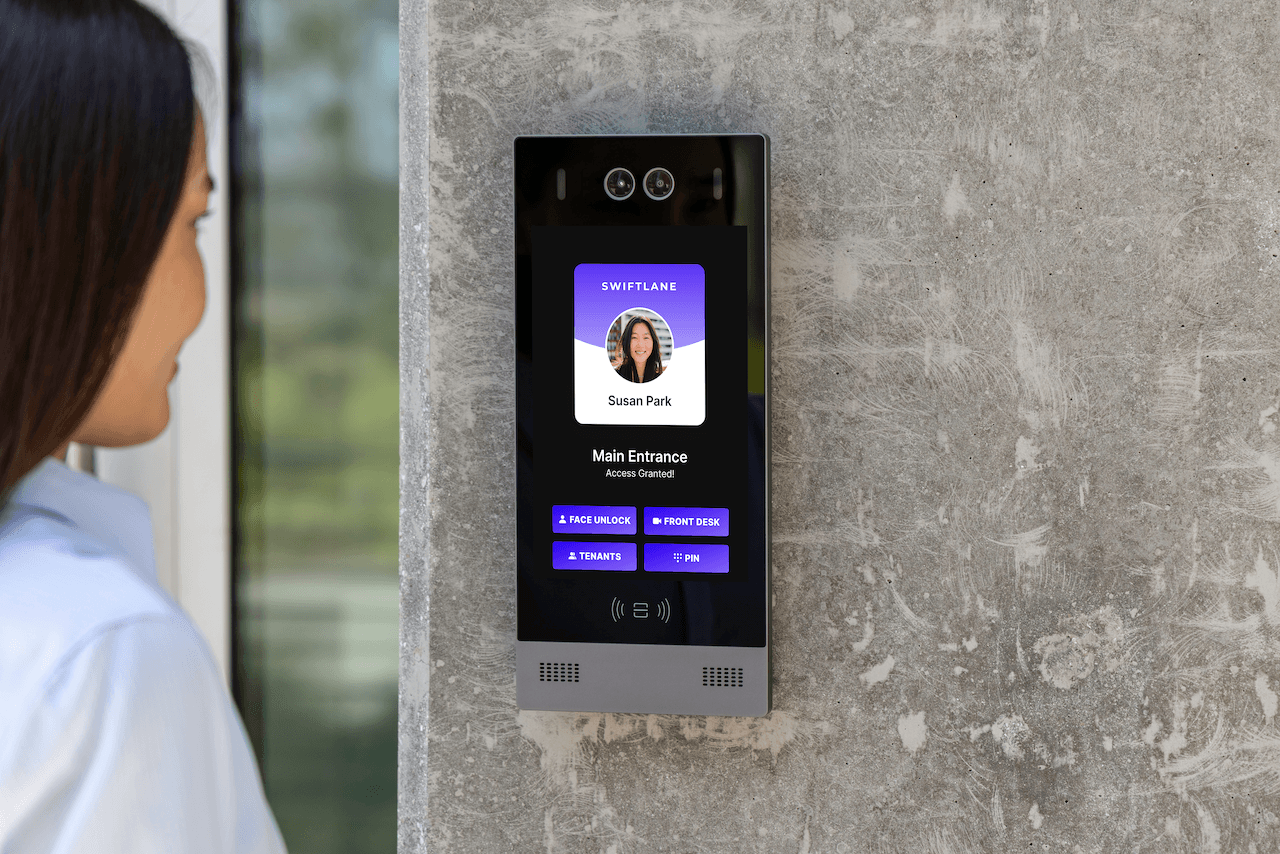
Swiftlane brings several of the layers above onto one cloud platform, so property teams can manage entry, visitors, deliveries, and floors from a single dashboard.
- Entrance access and visitor verification: Video intercoms with two-way video calling and remote unlock, plus mobile, key card, and PIN credentials for residents.
- Optional face recognition: Face recognition entry is available as an opt-in credential, with 3D liveness checks that block photos or videos from unlocking the door. Biometric privacy laws such as Illinois BIPA, Texas CUBI, and Washington RCW 19.375 may apply.
- Delivery and vendor access: PIN access includes single-use PINs that expire after five minutes and multi-use PINs scheduled for cleaners, contractors, and maintenance teams, with a photo audit log of entries.
- Floor-level control: Elevator access manages which floors each resident or visitor can reach.
- Door-level permissions: Cloud-based access control sets individual schedules and permissions for each door, and you can grant temporary visitor access in advance.
- Connectivity backup: Cloud-based systems with cellular backup, including Swiftlane, are designed to keep operating during an internet outage by switching to a cellular connection.
Get a quote to see how Swiftlane fits a specific property.
Frequently Asked Questions
Are controlled access apartments safer?
Controlled access limits who can enter a building, which reduces opportunities for theft, trespassing, and unwanted visitors. How much safer a building actually is depends on operations: credentials revoked at move-out, doors that latch, and residents who don’t let strangers in. Controlled access works best alongside cameras, package security, and routine audits.
How do you stop tailgating in an apartment building?
No single measure eliminates tailgating, but several reduce it. Visitor video intercoms and guest passes give residents an alternative to holding doors. Door-held-open alerts flag doors left open too long, and entrance cameras help identify repeat problems. Resident reminders not to let strangers in also help.
How can property managers prevent package theft?
Moving deliveries out of open lobbies is the most effective step. Access-controlled package rooms or smart lockers keep packages secure, and time-limited courier PINs let drivers deliver without sharing permanent codes. Entry logs and camera coverage of delivery areas help staff investigate any missing packages.
What happens to access control during an internet outage?
It depends on the system. Some cloud-based systems include cellular backup that switches over when the internet connection drops, while others rely on local controllers to keep credentials working. Ask vendors specifically how entry, calling, and remote unlock behave during an outage before choosing a system.
Do apartment building security cameras need on-site servers?
Not necessarily. Cloud video systems store footage off-site and allow remote viewing, but they depend on upload bandwidth and usually carry recurring fees. On-site NVRs keep footage local without ongoing cloud costs, but the recorder needs maintenance and physical protection. Some properties use a hybrid of both.
Do electrified locks on exit doors need approval?
Review changes to locking on egress doors with the local Authority Having Jurisdiction (AHJ), usually the building department or fire marshal. Codes commonly require these locks to release on fire alarm activation, and sensor-released locks carry added requirements. Involving the AHJ early helps avoid failed inspections.
How do you keep former residents from accessing the building?
Revoke all credentials on the move-out date, including fobs, mobile credentials, and PIN codes, rather than waiting for returned keys. Periodically compare active credentials against the current rent roll to catch anything missed. Systems synced with property management software can automate much of this process.
Start Improving Your Common Area Security
Get it touch with a Swiftlane Specialist to start improving the common area security in your apartment building.


